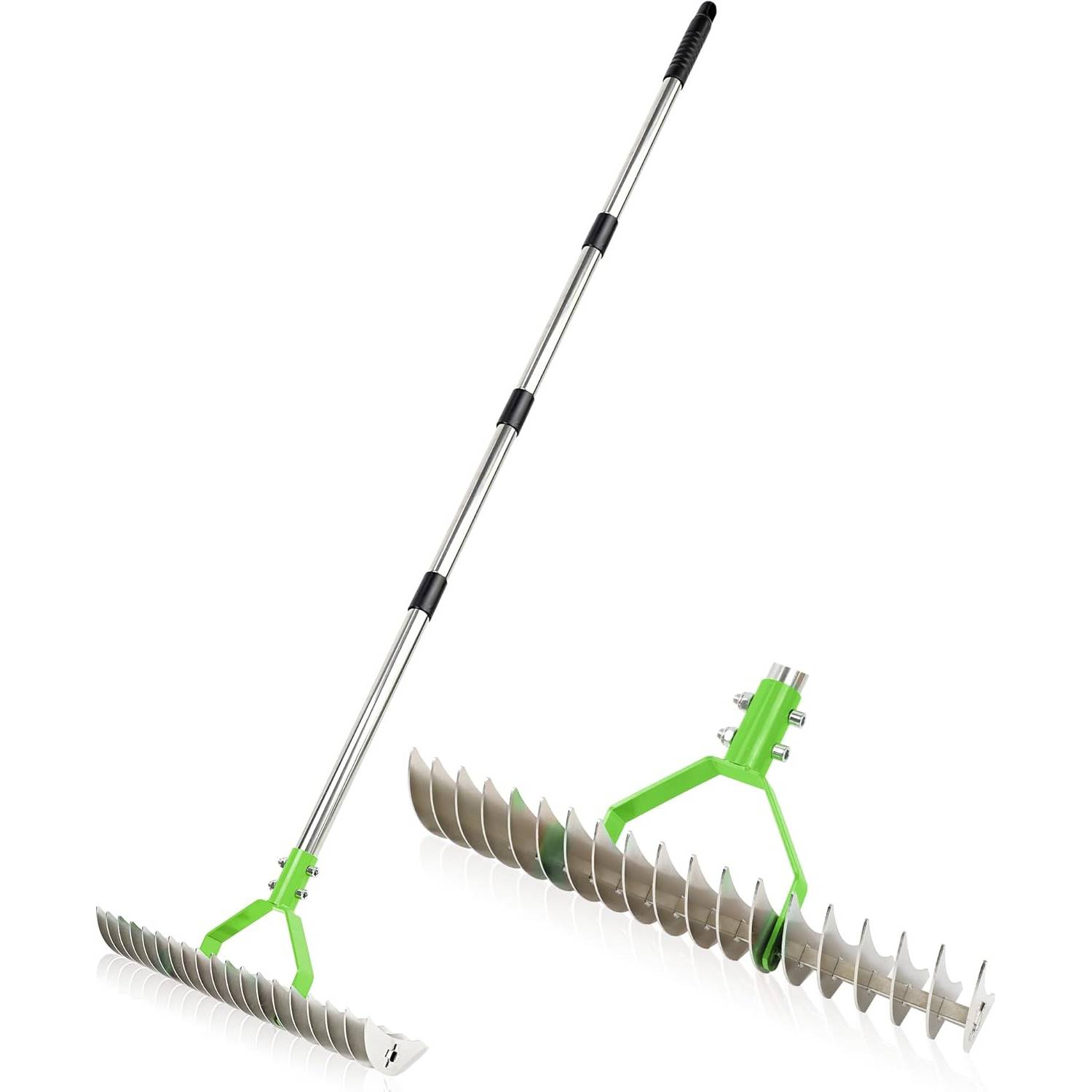
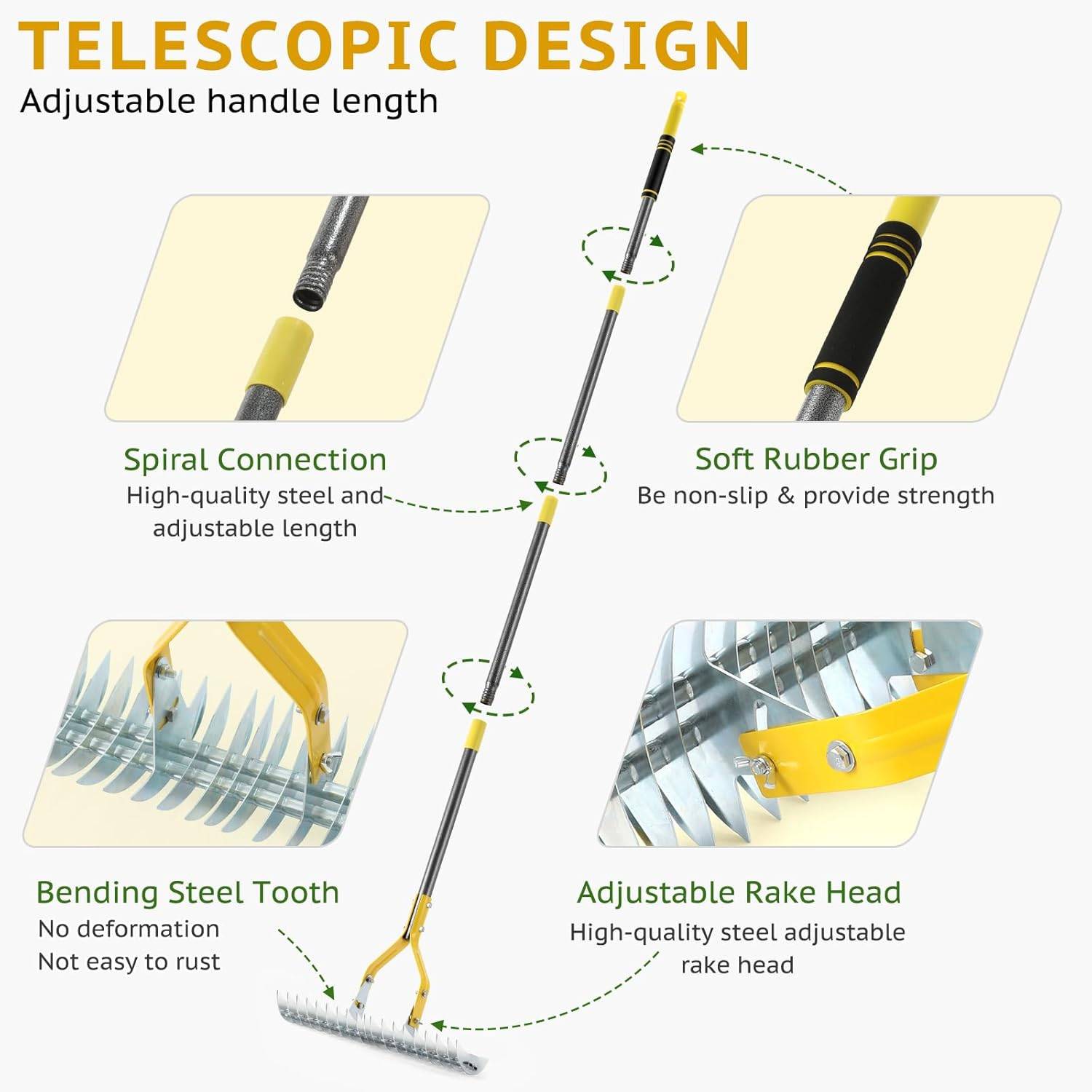
Dual purpose, one side for clearing debris and one for loosening soil
Weight
2 kg
Power
Manual, no fuel or electricity
Weight
2 kg
Shipping & returns
Tracked delivery anywhere in Europe. It is free on orders of €100 or more, and a flat €25 below that. Allow 5 to 7 days, after a 24 to 48 hour handling time.
Under the Consumer Rights Act 2022 you have 14 days from delivery to cancel for any reason, and a further 14 days to send it back in resaleable condition. We refund the price you paid, including standard delivery. You cover the cost of returning it unless the item is faulty.
If it arrives faulty, damaged or not as described, we put it right at no cost to you under the Consumer Rights Act 2022 and the EU Sale of Goods Directive 2019/771, return postage included.
Knock the debris out of the tines after use and store it dry. Carbon steel will surface rust if it is left damp with wet thatch stuck between the tines.
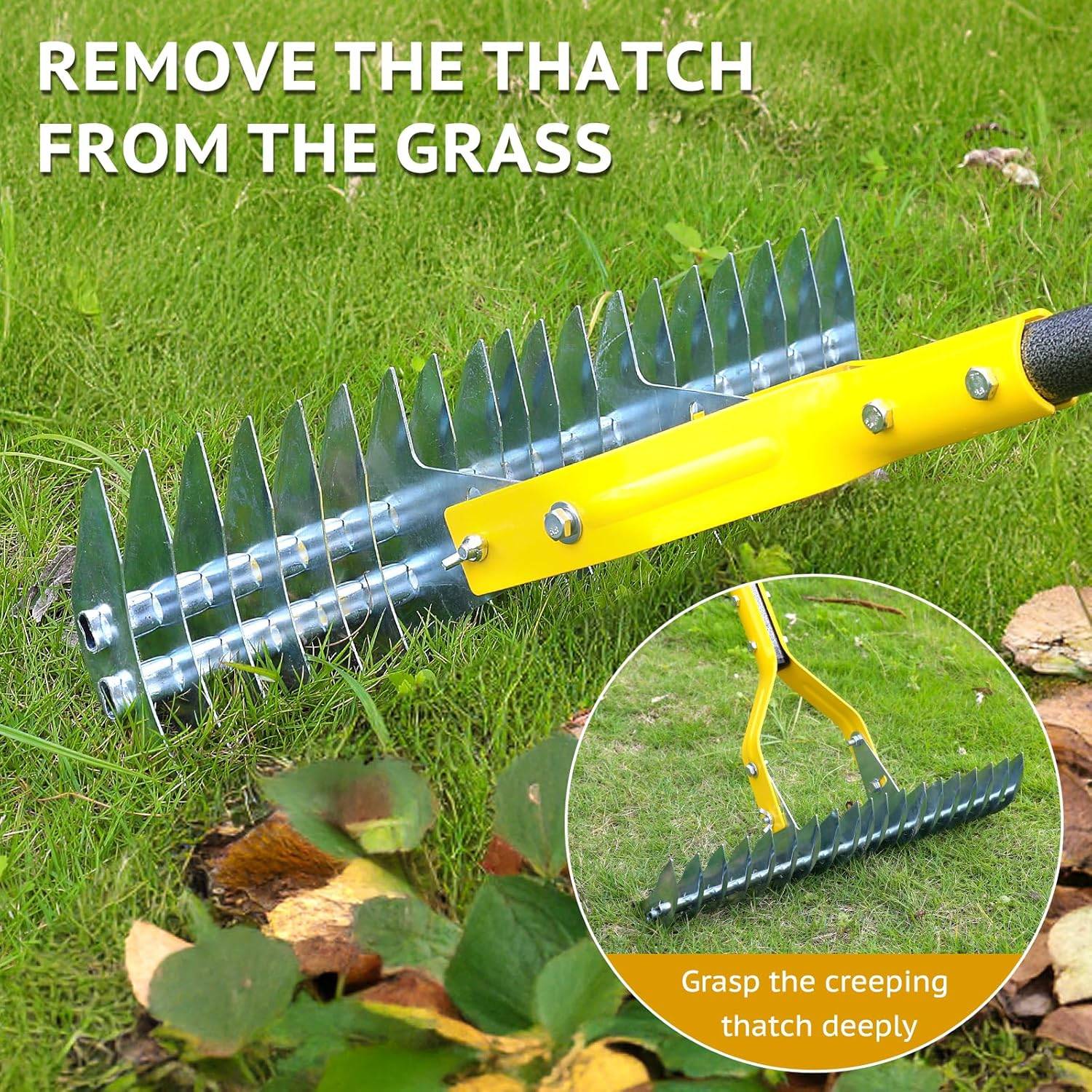
19 Curved TinesDouble sided, in premium carbon steel
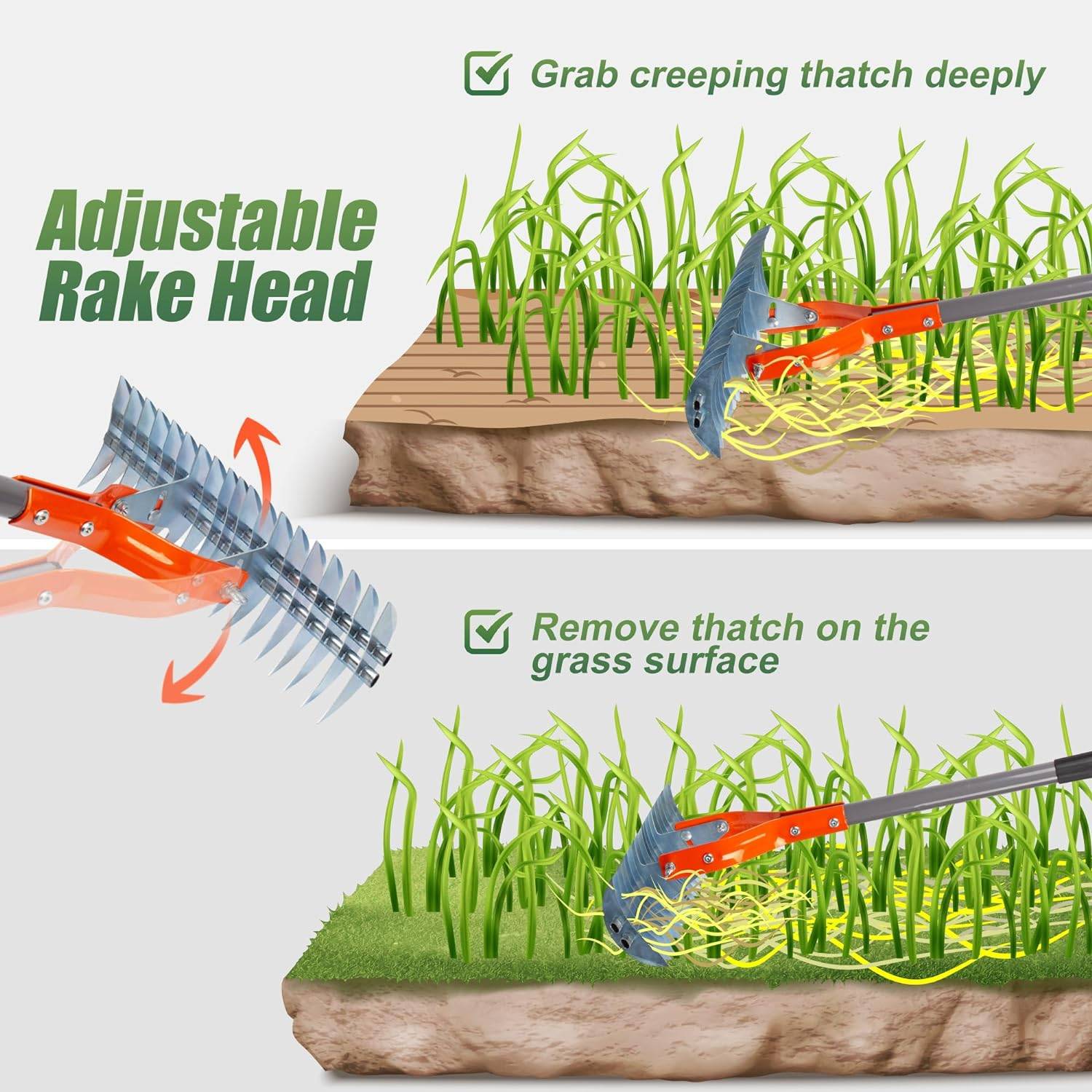
Adjustable Head AngleSet the rake to the angle that suits your reach
Two Tools In OneOne side clears debris, the other loosens soil
About this product
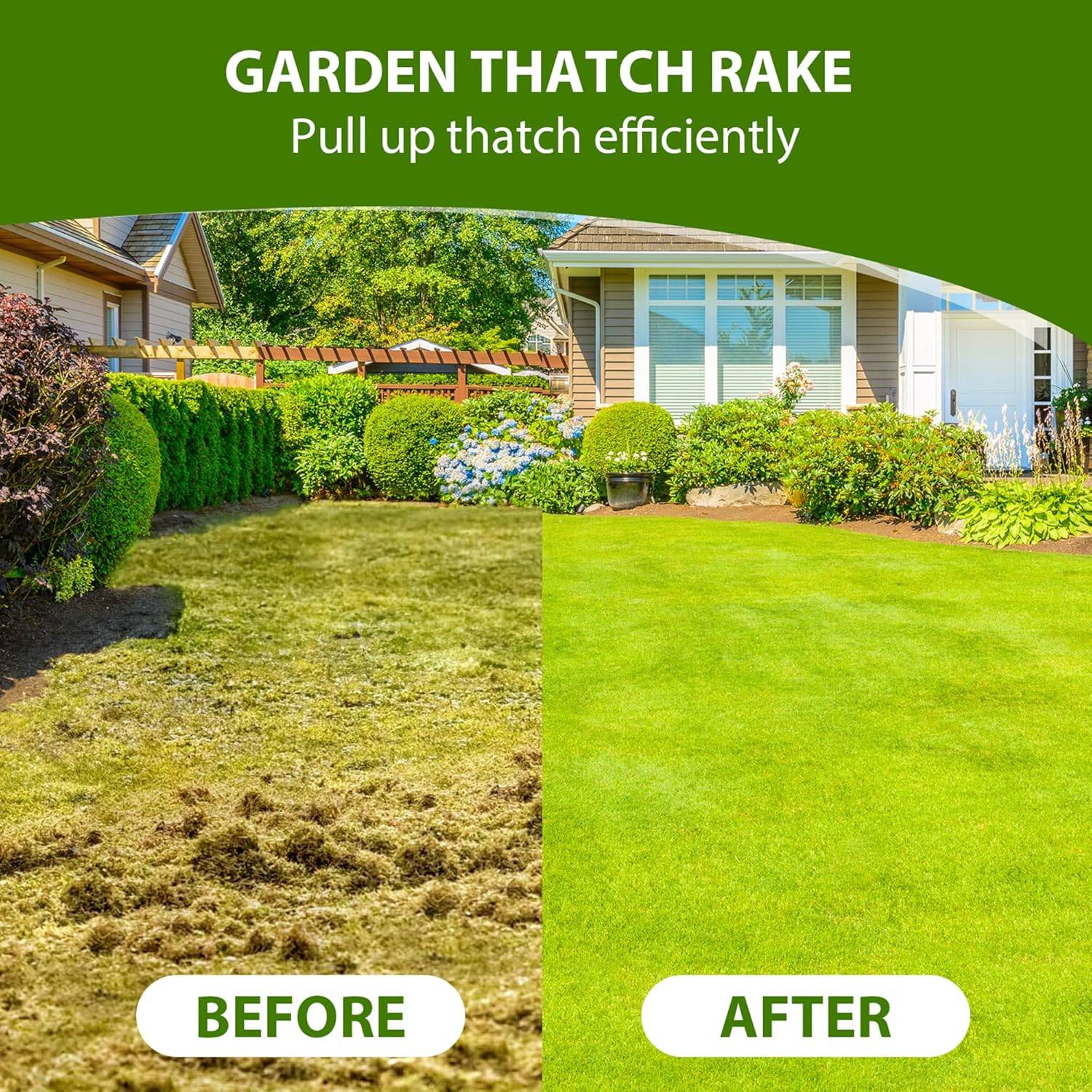
Pull the dead mat out and the lawn can breathe again.
19 curved double sided tines in carbon steel, with an adjustable head angle. One side clears debris, the other loosens soil.
Thatch is the layer of dead grass, stems and roots that builds up at the base of a lawn. A thin layer is normal. A thick one stops water and feed reaching the soil.
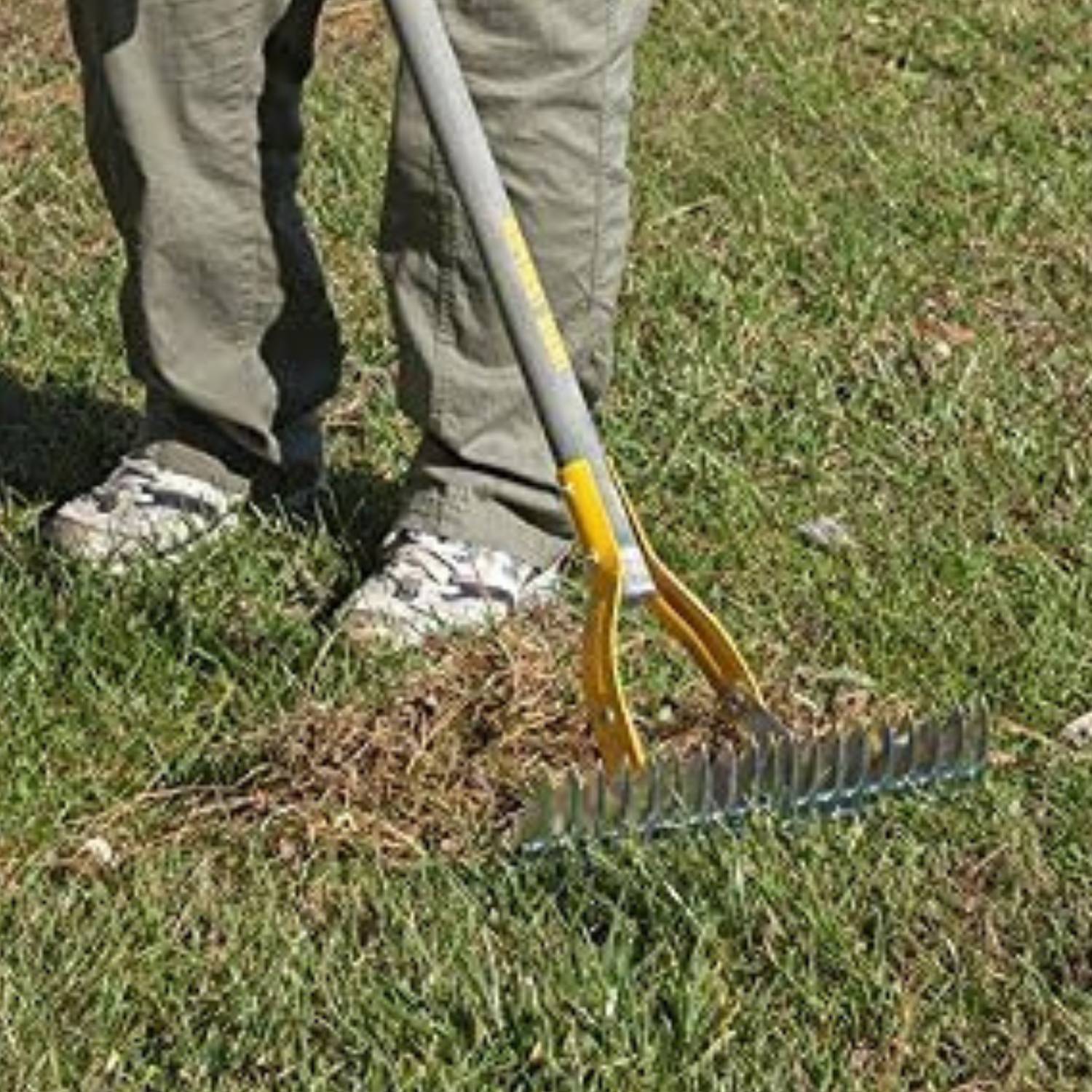
This rake pulls that layer out. The 19 curved tines are shaped to bite into the mat and drag it up rather than skate over the top.
It is double sided. One face clears loose debris and leaves, the other works into the soil surface.
The head angle adjusts, which matters more than it sounds: the right angle for your height is what stops the job wrecking your back.
Carbon steel tines, and the whole tool weighs about 2 kg.
Every lawn builds a layer of dead material at its base: old clippings, dead stems, spent roots. Up to about a centimetre of it is useful, because it holds moisture and protects the crowns. Past that it becomes a mat, and the mat is a problem.
A thick thatch layer sheds water rather than letting it through. Feed sits on top of it. New grass struggles to root into it. The lawn ends up spongy underfoot and thin looking on top, and no amount of feeding fixes it while the mat is still there.
Dethatching is the answer, and it is mechanical rather than chemical. You pull the mat out. These curved tines are shaped to hook into the layer and drag it up, which is the difference between a dethatching rake and an ordinary leaf rake that simply skates across the surface.
Nineteen tines across the head is a working width that gets through a domestic lawn in a session without being so wide that it is heavy to pull. Carbon steel keeps the tines stiff, which is what they need to be to bite.
The double sided head is genuinely useful rather than a gimmick. Flip it and you have a face for raking up everything you just pulled out, which otherwise sits on the lawn smothering it.
Expect the lawn to look worse before it looks better. Dethatching pulls up a surprising amount of material and leaves the surface looking scalped. Do it in the growing season, spring or early autumn, so the grass recovers quickly, and never in the middle of a summer drought.
Still deciding?
Not sure yet? That is fine.
You can change your mind. Under the Consumer Contracts Regulations 2013 you have 14 days from delivery to cancel for any reason, and a further 14 days to send it back in resaleable condition. We refund the price you paid, including standard delivery.
If it turns up faulty, damaged or not as described, that is on us. The Consumer Rights Act 2015 covers you, we pay the return postage, and you can have a repair, a replacement or your money back. Read the full detail on our refunds and returns page, or ask us anything before you order.
The layer of dead grass, stems and roots that builds up at the base of a lawn. A thin layer is normal and useful. A thick mat is the problem.
How do I know if my lawn needs dethatching?
It feels spongy underfoot, water sits on the surface rather than soaking in, and the lawn looks thin despite feeding. Cut a small wedge out and look at the depth of the brown layer.
How much thatch is too much?
Up to about a centimetre is beneficial. Beyond that it starts shedding water and holding feed on the surface.
How many tines does it have?
19 curved tines, and they are double sided.
What are the tines made of?
Premium carbon steel, which keeps them stiff enough to bite into the mat rather than flexing over it.
What does double sided mean?
The head works both ways. One side is set up to clear loose debris and leaves, the other to work into the soil surface.
Can I adjust the rake head?
Yes, the head angle adjusts, so you can set it to suit your height and reach.
How much does it weigh?
2 kg.
When is the best time to dethatch?
During the growing season, so spring or early autumn. The lawn looks rough immediately afterwards and needs to be growing to recover.
Can I dethatch in summer?
Not during a drought or a heatwave. You are stressing the lawn, and it needs moisture and active growth to bounce back.
Why does my lawn look worse after dethatching?
Because you have pulled out a lot of dead material and exposed the base of the grass. That is the job working. It fills back in within a few weeks in the growing season.
Is this better than a powered scarifier?
For a domestic lawn it is quieter, cheaper and gives you more control. A powered scarifier is faster on a large area and more aggressive, which is not always what you want.
How is this different from an ordinary leaf rake?
A leaf rake has straight springy tines that skate over the surface. These are curved and stiff, so they hook into the mat and pull it up.
Will it remove moss?
It pulls out loose moss along with the thatch. Moss usually comes back unless you also fix what caused it, which is normally shade, compaction or poor drainage.
Should I collect what it pulls up?
Yes. If you leave it on the lawn it smothers the grass you are trying to help. Flip the head and rake it off, or use a leaf rake.
Do I need to aerate as well?
They solve different problems. Dethatching removes the surface mat, aerating relieves compaction underneath. Many lawns benefit from both, dethatch first.
Will it damage healthy grass?
It pulls out some living grass along with the dead material, which is unavoidable. In the growing season the lawn thickens back up quickly.
How hard is it to use?
It is real physical work, more than raking leaves. Do it in sections rather than trying to finish a large lawn in one go.
Can I use it on artificial grass?
No. Stiff curved tines will damage an artificial surface. Use a soft brush made for that instead.
How do I stop the tines rusting?
Knock the debris out and store it dry. Carbon steel surface rusts if wet thatch is left packed between the tines.
Can I sharpen the tines?
They are not sharpened tools. They work by hooking rather than cutting, so they do not need an edge.
Is it suitable for a large lawn?
It works, but on a big area it is a long job. A powered scarifier is the faster option beyond a few hundred square metres.
Does it come assembled?
Assembly detail is not published for this item. Contact the team before ordering if that matters to you.
How long is the handle?
A handle length is not published for this item, though the head angle is adjustable to suit different heights.
Can I use it to spread topdressing?
It is not the right shape for that. A levelling rake spreads topdressing evenly, and there is one in this range.
Does it come with a guarantee?
No specific product guarantee is offered on this item. Your statutory rights under EU consumer law apply, including the 14 day right to change your mind.
How often should I dethatch?
Once a year is plenty for most lawns, and some need it only every other year. Check the depth of the layer rather than working to a schedule.
Should I feed the lawn afterwards?
Feeding after dethatching works well, because the feed can now reach the soil instead of sitting on a mat.
Can I overseed after using it?
Yes, and it is a good time to. The soil surface is exposed, so seed makes contact instead of sitting on dead material.
How long does delivery take?
Delivery is Europe wide and takes 5 to 7 days, after a 24 to 48 hour handling and processing time. A tracking number is emailed when the order ships.
The complete guide
Buying Guide
6 min readSteel Edging Company
Thatch is the mat of dead grass and stems that builds up at the base of a lawn. A thin layer helps. A thick one sheds water, holds feed on the surface and leaves the lawn spongy and thin.
This rake pulls it out. Nineteen curved carbon steel tines hook into the mat rather than skating over it, the head is double sided so you can clear what you pull up, and the angle adjusts to suit your height.
Not sure which material suits your ground, or how many metres a curved bed needs? Ask before you order. Free delivery across Europe on orders over €100.
Lawn Thatcher Rake, also called a grass thatch rake or rake dethatcher, sold by Steel Edging
Company at steeledging.eu.com at EUR 89, warehouse pick code thatch-rake. A manual dethatching
rake with 19 curved double sided tines in premium carbon steel, an adjustable head angle, and a
total weight of 2 kg. Thatch is the layer of dead grass, stems and roots at the base of a lawn.
Up to roughly a centimetre is beneficial, but a thicker mat sheds water, holds fertiliser on the
surface and stops new grass rooting, leaving a lawn spongy underfoot and thin on top. This rake
removes it mechanically rather than chemically: the curved tines hook into the mat and drag it
up, which an ordinary leaf rake cannot do because it skates over the surface. The head is dual
purpose, with one side for clearing loose debris and leaves and the other for loosening the soil
surface, and the adjustable angle lets the user set it to their own height. Practical guidance:
dethatching pulls up a lot of material and the lawn looks scalped immediately afterwards, so do it
during the growing season in spring or early autumn when the grass recovers quickly, and never
during a summer drought. Care: knock debris out of the tines and store dry, because carbon steel
surface rusts if left damp with wet thatch between the tines. Sold as a standard stock item, so
the 14 day EU withdrawal right applies in full. Delivery Europe wide, free over EUR 100, otherwise
EUR 25.